
Unless you have an aptitude for devotion, this might have been a strange month at the movies.
A mix of horror (Psycho Killer, Scream 7) and kinky romantic dramas (Wuthering Heights, Pillion) is par for the Valentine’s-season course, but this year’s cinematic gifts were less fun to open than flowers and chocolate. With the Oscars set to crown the best movies of the year next weekend — as if we didn’t already know — there’s no time like the present to reflect on some of the best (and worst) movies of February.
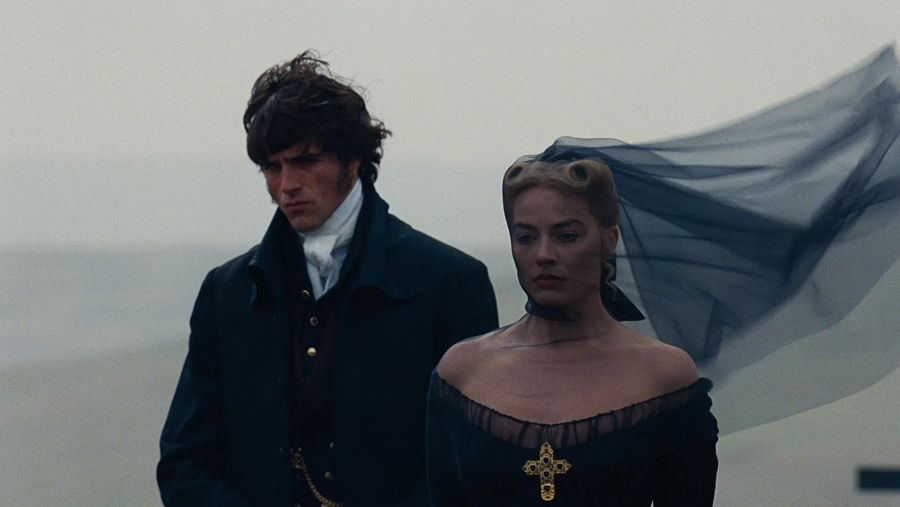
More fanfic than adaptation, Emerald Fennell’s “Wuthering Heights” — quotation marks hers and very much appropriate — feels like it was directed by the collective spirit of Tumblr rather than an actual human. This isn’t your lit professor’s Wuthering Heights, and it certainly isn’t Emily Brontë’s; having recently read the book in anticipation of this movie, I can say with utmost confidence that at no point does Heathcliff (Jacob Elordi) chain Isabella (Alison Oliver) up and make her bark like a dog (much to her delight). Far be it from me to kink shame, as the film is occasionally enjoyable in its own tawdry way — it’s just more akin to the trashy paperback its poster makes it look like than a major work of the English canon.
With production design somewhere between Tim Burton and a Pinterest board, the movie is rarely as nice to look at as Fennell and company seem to think — but the visuals, like the doomed romance between Catherine (Margot Robbie) and Heathcliff, are just as rarely boring. Eliding almost the entire second half of the novel and drastically changing other key details, Fennell is sure to displease Brontë purists; it should come as little surprise that the director, whose father is a jewelry designer known as the “King of Bling,” has dropped any hint of racism and classism from the story. There’s a fine line between star-crossed and stupid, and these two lovers — to say nothing of the movie as a whole — are rarely on the right side of it.

“Nigeria is hard,” Folarin (Sope Dirisu) tells his two young sons on a fateful trip into Lagos. Nothing we see in Akinola Davies Jr.’s thoughtful feature debut suggests otherwise. Folarin’s job hasn’t paid him in six months, and his boys see him so rarely that they jump at the opportunity to accompany him on his excursion from their small village into the capital so he can finally receive his long-overdue wages. In passing we see newspaper headlines like South Africa’s New Apartheid and hear brief debates about who, if any, of Nigeria’s politicians is best equipped to turn the country around. Akinola (Godwin Chiemerie Egbo) and Olaremi (Chibuike Marvellous Egbo) don’t notice any of this, of course: they’re too excited to be traveling into the big city with their father to concern themselves with such trivial issues.
They’re the only ones: My Father’s Shadow takes place during the 1993 election, a time of unrest that’s mirrored in the boys’ experiences with their father and their country. Nigeria is hard, but Davies Jr. shows that it’s beautiful as well. Aki and Remi’s mother tells them that the reason they rarely see their father is because he loves them so much that he spends all his time working to provide for them. This makes them wonder: if it’s also true that God loves them, does that mean that loving someone means not seeing them?
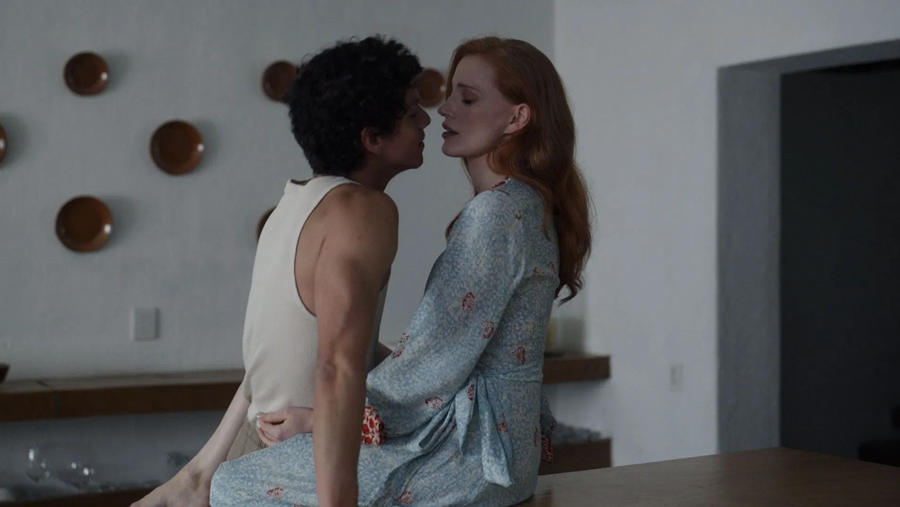
If movies are like dreams, Michel Franco’s are the restless kind. A gifted filmmaker whose creative choices are sometimes bewildering and sometimes astounding, he represents the shaded area of the auteur/provocateur venn diagram. One of his films ends with the protagonist being unceremoniously hit and killed by a car, while his 2021 stunner Sundown is among the best, most overlooked movies of the decade. Dreams lies somewhere in between those two extremes, charting the tumultuous relationship between a wealthy heiress (Jessica Chastain) and her younger lover, a Mexican ballet dancer (Isaac Hernández) in the country illegally. She loves him, but not as much as she loves wielding the power that comes from being wealthier and more powerful than he is — a dynamic he’s clearly grown weary of.
Chastain, to her credit, continues to make bold choices after being crowned Best Actress for her role as the eponymous evangelist in The Eyes of Tammy Faye. This is her second collaboration with Franco following the similarly thorny Memory, and the fact that this is a much weaker effort doesn’t fall at her feet. As is often the case with Franco, this is an unpleasant movie about unpleasant people. It isn’t meant to be enjoyed so much as observed from multiple angles in hopes of figuring out why these characters are the way they are and what we might glean from their experiences. If that doesn’t sound like a ringing endorsement, well, Franco likely doesn’t mind — which is kind of the problem with his work as a whole.
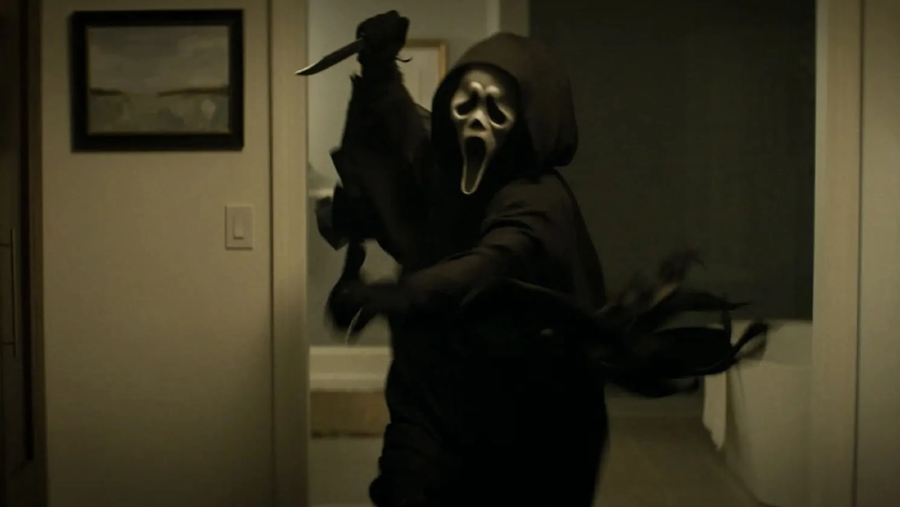
Thirty years after writing the original Scream, franchise creator Kevin Williamson has finally directed one. Too bad it’s the worst of the bunch. It doesn’t help that he was only brought on to helm this cursed production after original director Christopher Landon departed the project along with stars Melissa Barrera and Jenna Ortega, with Barrera being fired for her outspoken views on Palestine and Ortega seemingly leaving in solidarity. One $500,000 rewrite and a cast shakeup later, here we are with a sequel-come-lately that makes you wonder how much more the increasingly self-referential series has to offer.
Filling the void left by the Carpenter sisters is none other than a returning Sidney Prescott (Neve Campbell) herself, who was conspicuously absent from the last film and once again finds herself the object of Ghostface’s obsession. Her husband (Joel McHale) and daughter (Isabel May) have to contend with being in the killer’s crosshairs as well, but Scream 7’s problem isn’t its familiarity. The high body count and gruesome death sequences are more of a crutch than usual, with Williamson trying and failing to bridge the generational divide of the last three decades: where the first movie was a meta sendup of slasher movies as a whole, this one is too myopic to be about anything other than Scream itself. The more it reminds you of the original, the more you’ll wonder why you didn’t just stay home and rewatch that one instead.