
Every once in a while, a movie breaks containment.
That’s how I think of it when people who aren’t in the movie bubble start asking about a particular film and make a rare pilgrimage to see it in theaters. Project Hail Mary’s four-quadrant success brings to mind that of Sinners, which was released just under a year ago, broke containment in the same way, and went on to win four Oscars earlier this month. I don’t know if the tale of Ryland and Rocky will fare as well with awards bodies, but it already seems like the movie of the year in many of the ways that matter. As for the rest, well, read on for my thoughts on four smaller movies that all offered something of their own this month.
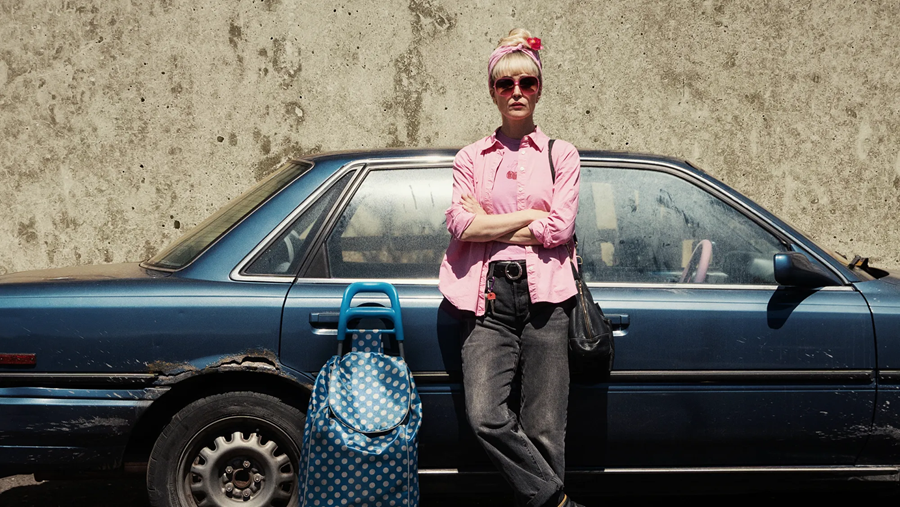
“At least you have your car,” a volunteer at a homeless shelter tells Amanda (Rose Byrne) after turning her away due to lack of space. Yeah, about that — Tow follows our embattled heroine as she deals with a legal nightmare that begins when the ‘91 Toyota Camry she’s been living in is stolen, towed, and impounded by a shady company demanding $273 that she doesn’t have. Directed by Stephanie Laing and based on a true story, the film is both a detailed character study and a familiar woman-against-the-system drama buoyed by Byrne’s excellent performance. Fresh off her Oscar-nominated turn in If I Had Legs I’d Kick You, she’s as convincing here as she was in that anxiety attack of a movie.
With bottle-blonde hair and a Rosie the Riveter bandana, Amanda’s superpower is stubbornness mixed with persistence. Tow unfolds over the course of one long, Kafkaesque year in which she’s helped by an idealistic young attorney at a nonprofit (Dominic Sessa) and the manager of a high-barrier homeless shelter (Octavia Spencer). As difficult as being without her car is, Amanda’s biggest struggle is an internal one: refusing to accept that she is, in fact, experiencing homelessness. It’s simply so far removed from her very concept of herself that she’s unable or unwilling to acknowledge it, which prevents her from solving any of the problems arising from it. Fortunately for Tow, Byrne is in the driver’s seat even when her character isn’t and is an eminently steady hand behind the wheel.
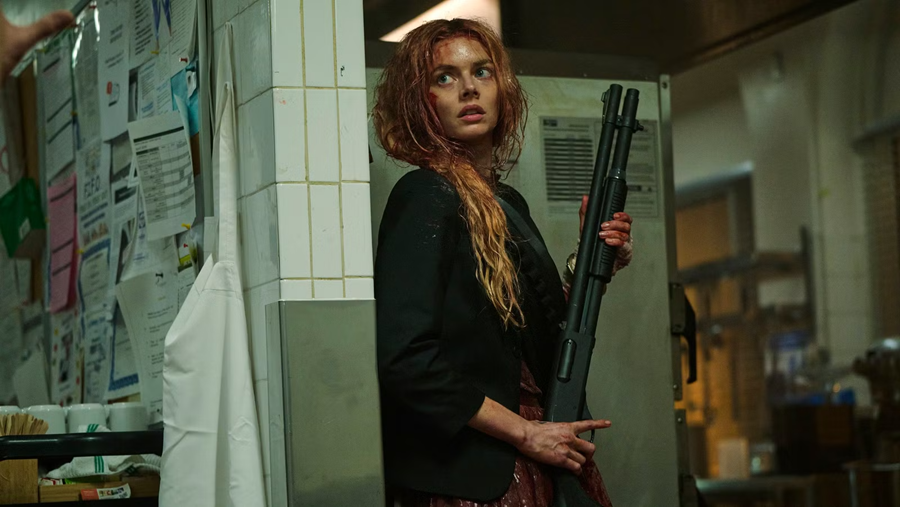
Samara Weaving’s scream could wake the dead. It can also delight a theater full of rowdy moviegoers, which is exactly what it did in 2019’s Ready or Not. The almost-as-good sequel begins immediately where the first left off and finds Grace (Weaving) hilariously recalling those events from the relative safety of her hospital bed: On her wedding night, her in-laws forced her to play a deadly game of hide and seek and revealed themselves as members of a satanic, Illuminati-like organization that, as fate would have it, still isn’t finished with her. The idea of a secretive, ultra-wealthy cabal of string-pulling sociopaths hunting the hoi polloi for sport is, uh, not as fantastical as it was when the first movie came out, which is part of what makes Here I Come work as well as it does.
Returning directors Matt Bettinelli-Olpin and Tyler Gillett — who are on quite the roll with this, the prior two Scream movies, and Abigail — lean into the exploding-body silliness of it all without making the movie altogether unserious. There are still life-or-death stakes here, especially with the introduction of Grace’s sister Faith (Kathryn Newton) to the hunt. “There are no good guys or bad guys,” one of their would-be killers (Sarah Michelle Gellar) proclaims. “There’s just the system.” Watching that system get dismantled proves entertaining largely due to the effortlessly charming Weaving, who’s so easy to root for that you find yourself rooting for the rest of the movie by proxy.
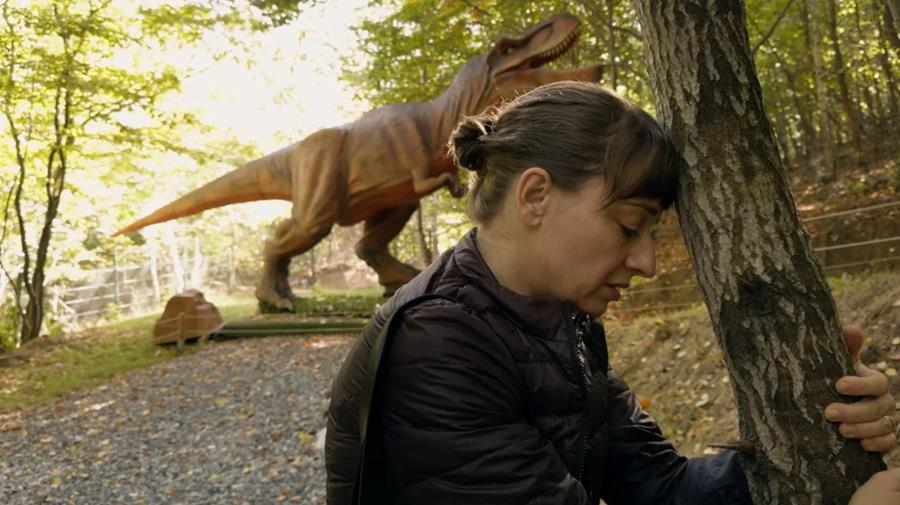
No one makes movies quite like Radu Jude, whose sendups of contemporary society are both specific to Romania and sadly, hilariously universal. As much a troll as a sharp-eyed observer of the ills of the modern world, he holds up a funhouse mirror to everyday absurdities so we can see how ridiculous they’ve been all along. Kontinental ‘25, his second movie in the last year following the less accomplished Dracula, follows a bailiff who falls into an existential crisis after overseeing an eviction that results in an elderly man hanging himself. Practically inconsolable, Orsolya (Eszter Tompa) blames herself: “If I didn’t have you and the children,” she tells her husband that night, “I would have killed myself, too.”
Viewers are unlikely to lay the blame at her feet, instead seeing her as a mere cog in an admittedly cruel machine, but Tompa’s haunted performance will have you sharing her pain. This is another talky, discursive film from a director with a lot on his mind and little interest in filtering his thoughts, a formula that reached its high-water mark in the masterful Do Not Expect Too Much From the End of the World; Jude’s characters discuss everything from Zen koans and the movie Perfect Days to the strained relations between Romania and Hungary. (A less explicit cinematic allusion is the title itself, a clear riff on Roberto Rossellini’s Europe ‘51.) Kontinental ‘25 takes place in Cluj, which, like the vampiric region of which it’s a part, used to belong to Orsolya’s native Hungary: “They stole Transylvania from us and couldn’t even take care of a good thing,” Orsolya’s mother tells her in one of the more compelling tangents. Jude isn’t not self-indulgent in moments like these, but he’s certainly never boring, either.

Body horror meets family drama in Alpha, the latest from a director far better suited to one half of that formula than she is to the other. Julia Ducournau, who made a name for herself with the cannibalistic Raw before winning the Palme d’Or for her Cronenberg-inflected Titane, has a habit of being provocative without actually provoking much in the way of fresh ideas. That unfortunate tendency continues apace in this clunky HIV/AIDS parable named for a teenager who gets the first letter of her name tattooed on her arm and spends the rest of the movie paying for it. Alpha’s stick-and-poke “A” acts as a literal scarlet letter etched into her skin that may or may not be infected with a mysterious virus that essentially turns people into marble statues. It’s a striking visual, as are most in Ducornau’s transgressive oeuvre, and the way it stigmatizes the afflicted makes the central metaphor all but explicit.
It doesn’t make it more poignant, however. A trio of committed performances from Mélissa Boros (as Alpha), Golshifteh Farahani (as her mother), and Tahar Rahim (as her drug-addicted uncle) offset some of Alpha’s weaknesses, but the flaws in Ducornau’s script are so fundamental as to be an ailment the cast doesn’t have a strong enough immune system to overcome. The more Ducornau plays with time and perception, the harder she seems to be trying to make the movie live up to its name; ultimately, though, it’s more of a beta.