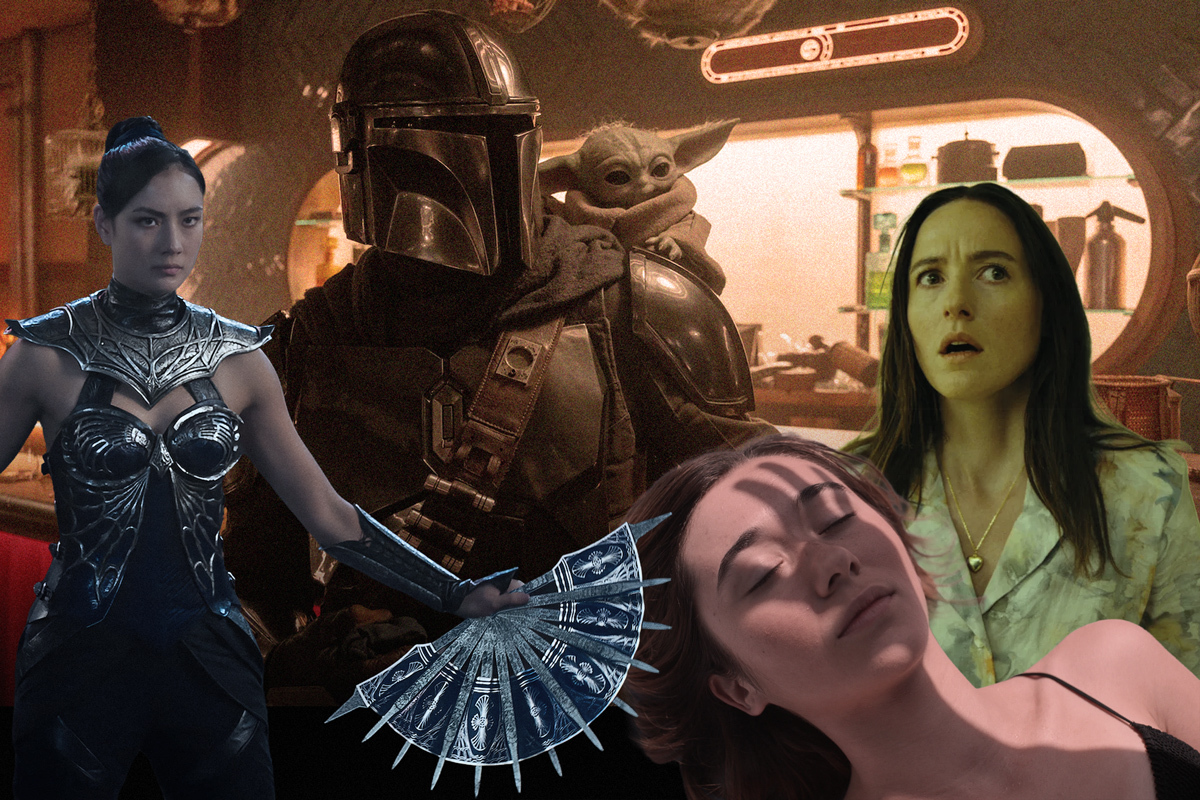
What a month for horror.
Bookended by two stellar exemplars of the genre (Hokum and Backrooms) with a few lesser titles (Obsession and Passenger) sandwiched between them, May saw a number of box-office firsts. Obsession instantly emerged as an outlier when it made more money in its second weekend than it did in its first, then earned even more at the box office its third weekend — something that hasn’t happened outside of the holidays since E.T. Backrooms, meanwhile, shattered A24’s opening-weekend record on its way to becoming the horror movie of the year. Not bad for a pair of twentysomething YouTubers-turned-filmmakers, even if I wasn’t as obsessed with Obsession as everyone else seems to be.
Far be it from me to rain on the parade, though. I love when low-budget projects based on original ideas break containment and remind Hollywood $200 million franchise fare isn’t the only way to turn a profit, even if it means those outliers are destined to become franchises themselves. Before that happens, there’s no time like the present to get lost in the backrooms — I was floored by the film, as you’ll read below, and am already counting the days until I can see it again.
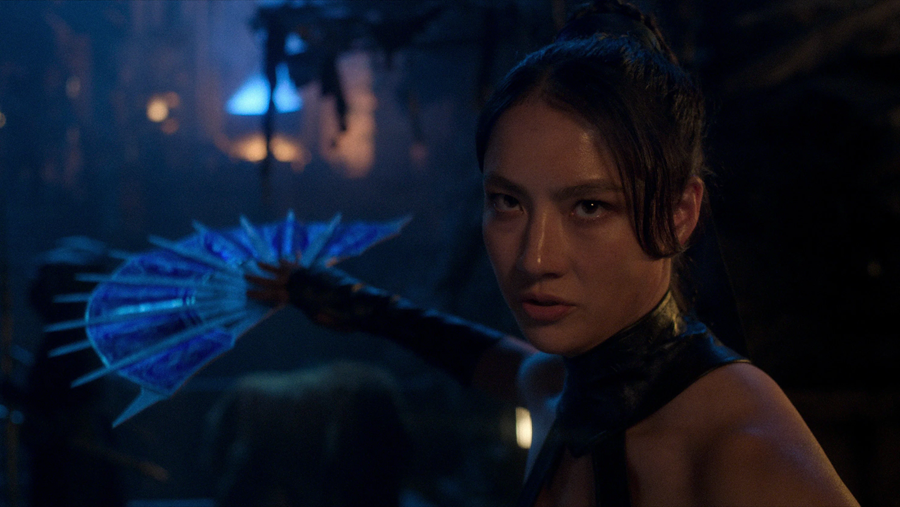
Certain things are expected of a Mortal Kombat movie, all of them eminently reasonable. There must be at least one (1) Liu Kang fireball, one (1) instance of Shao Khan yelling “finish him!” at the end of a fight, and the theme song has to play over the credits. All three prior movies have delivered these modest requirements, and yet most of them have lacked something more important: a reason to care. Mortal Kombat II delivers that in the form of Kitana (Adeline Rudolph), who as a little girl is forced to watch her father, King Jerrod, fall at the hands of the villainous Shao Khan and then spends the next two decades plotting against the usurper while being raised as his ward. The brief prologue showing that tragic backstory might be the most emotionally involving scene in the entire franchise — a low bar to clear, but still — and positions her as the hero it’s always needed.
Returning director Simon McQuoid’s sequel appeals to the same audience as the 1995 original, by which I mean the exact same people: millennials who grew up playing the video games and have spent the last few decades bemoaning the lack of an R-rated film adaptation. (I know because I’m one of them.) 2021’s reboot wasn’t the movie such fans have been waiting for, but this one is — not a flawless victory, perhaps, but at least a reason to keep playing (and watching).
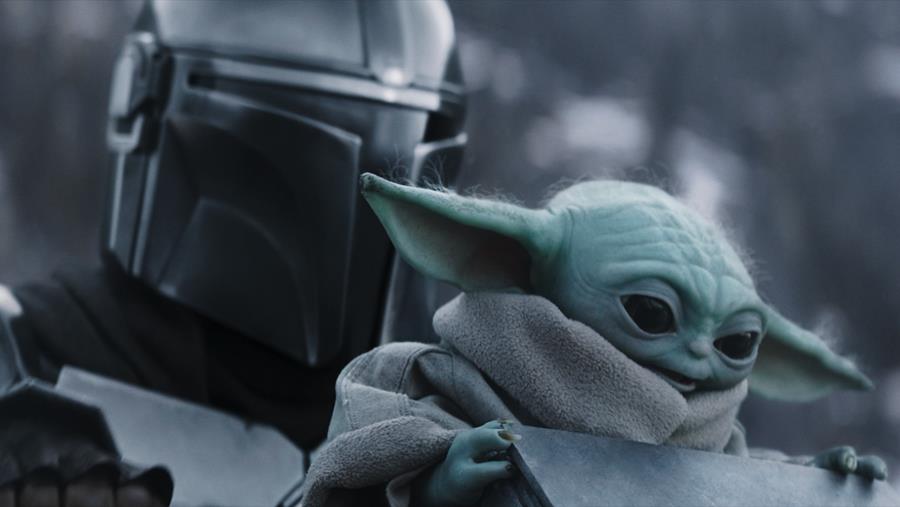
There are those who would have you believe we’ve seen enough of Grogu, better known as Baby Yoda. These people are fools. Adorable and toyetic in an admittedly manipulative way, the most charming creature to emerge from a galaxy far, far away in decades makes a nimble transition from the small screen to the big one in The Mandalorian and Grogu. Even its defenders will admit the film feels like little more than an extended episode of the Disney+ series on which it’s based, but at least it’s a binge-worthy one. A greater emphasis on actual puppets and stop-motion rather than more CGI lends a throwback vibe befitting the franchise as a whole — Star Wars’ biggest problem for years now is the fact that it’s far too oversaturated to feel special, but at least it can actually feel like the Star Wars of yesteryear. Just as importantly, The Mandalorian and Grogu represents an evolution in the eponymous characters’ relationship and, by extension, the series itself: “The old protect the young and then the young protect the old,” Mando says after Grogu rescues him for a change. This is the way indeed, and your humble correspondent, for one, looks forward to the next chapter in their journey — even if it’s confined to the small screen.

Just as everyone processes grief differently, so too does every movie depict it differently. In Lucía Aleñar Iglesias’ Forastera (Spanish for “stranger”), the death of a beloved grandmother ends the idyll of a teenager’s summer vacation in Mallorca and thrusts her into a new season of life for which she’s woefully underprepared. Everything that has been occupying Cata’s time up until the moment she discovers her abuela Catalina’s body — learning to drive, spending time with a Swedish boy on the beach — suddenly seems frivolous, and yet she has little choice but to keep going through the motions. She doesn’t have to do it in her own clothes, though: Cata tries on one of the departed’s dresses shortly after the funeral and feels strangely at home in her namesake’s duds, marking a subtle transformation that colors the rest of Iglesias’ engaging character study.
“It smells damp,” Cata’s mother tells her after pressing the dress to her nose, “everything ends up smelling like that in this house.” Even dreamy holiday destinations have their mildewy downsides, but the more of the family matriarch’s belongings Catalina interacts with, the closer to her she feels. The line between dress-up and role-playing is increasingly porous in Forastera, with Zoe Stein delivering a standout performance as Cata’s identity begins to blur with that of the deceased. Not every ghost story has to be about a haunting, and few are this tenderly evocative.
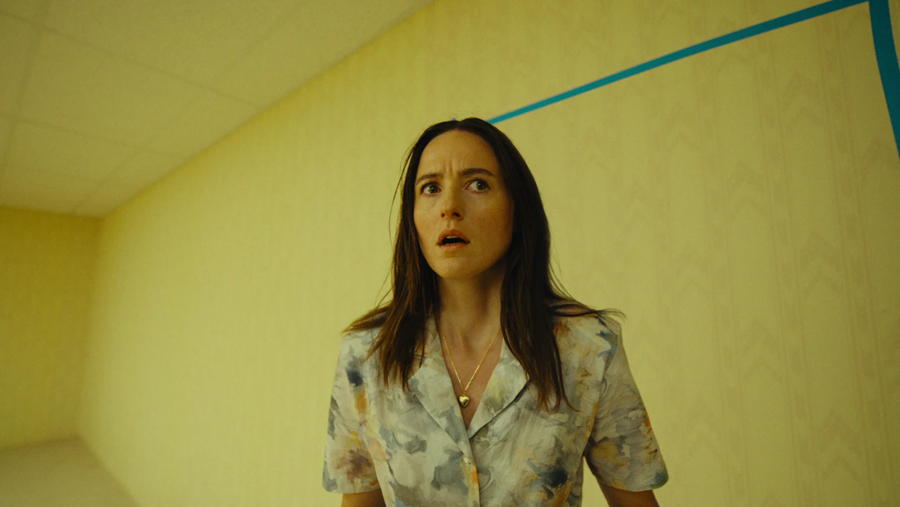
Depending on how much time you spend in certain corners of the internet, you may already be familiar with the lore: a seemingly endless maze of drab hallways and windowless rooms, the beige carpet and fluorescent lights of which initially appear harmless. But then you notice the nonsensical architecture, the bizarre array of items — stop signs, dirty clothes, even a seagull — strewn about and sometimes protruding from the walls, and noises in the background that can’t possibly be human. These are the backrooms, and 20-year-old director Kane Parsons first caught the attention of A24 by making a viral web series about them. The feature-length adaptation, starring Chiwetel Ejiofor and Renate Reinsve, is first and foremost a marvel of production design.
The eponymous setting is endlessly off-putting in its featurelessness, the interior-design equivalent of Michael Myers’ expressionless mask: the more you look at it, the more nothing looks back. “It’s like describing a dog to someone who’s never seen a dog and then asking them to draw it,” Clark (Ejiofor) tells his therapist (Reinsve) after coming across the liminal expanse in the basement of his furniture store. With a found-footage camcorder aesthetic that was already vintage when Parsons was born and an unsettling vibe reminiscent of The Blair Witch Project updated for the creepypasta age, the film gets increasingly terrifying the deeper Clark explores. The more time he spends down there, though, the more he realizes the question isn’t how far the backrooms go: it’s how far he can go before either losing his way or encountering something that prevents him from returning as himself.