Issue
74
Dead Man’s Wire
- Director:Gus Van Sant|
- Screenwriter:Austin Kolodney|
- Distributor:Row K Entertainment|
- Year:2025
What makes a Gus Van Sant movie a Gus Van Sant movie?
The more of his films you see, the harder it might be to answer that question. The chameleonic filmmaker is as comfortable in the multiplex as he is in the art house, with a varied filmography that ranges from Good Will Hunting and Milk on one end of the spectrum to My Own Private Idaho and Elephant on the other. An icon of both independent and queer cinema, Van Sant’s versatility might best be explained by the fact that he directed the aggressively uncommercial Gerry less than a year after having a cameo in Jay and Silent Bob Strikes Back.
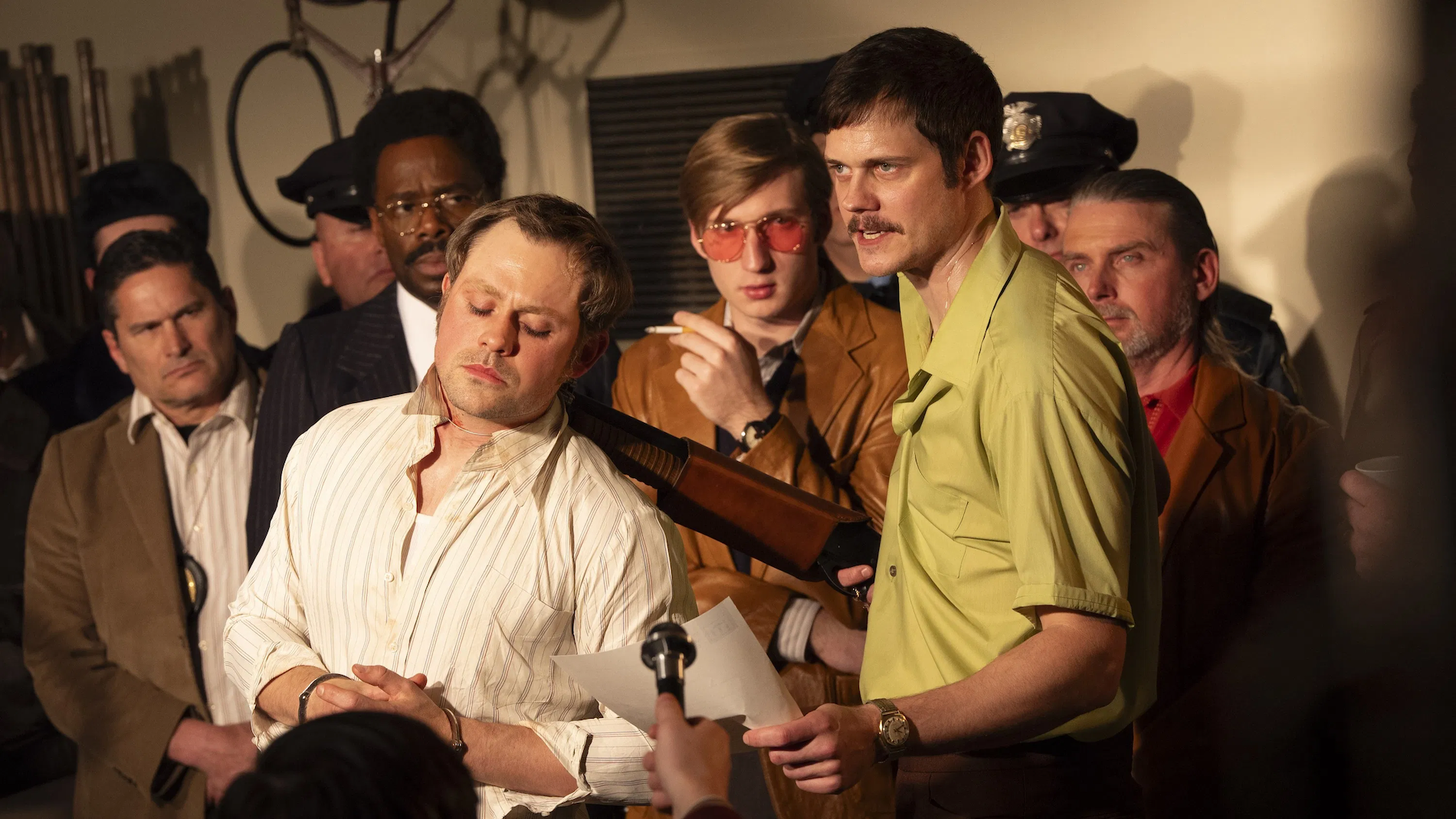
Dead Man’s Wire finds him between those two extremes. An acolyte of Béla Tarr, the Hungarian slow-cinema luminary who died this week at 70, Van Sant is a nimble filmmaker who modulates his approach to fit the material. In this case it’s the true story of Tony Kiritsis (Bill Skarsgård), who in 1977 took his mortgage broker Richard Hall (Dacre Montgomery) hostage in Indianapolis after being taken advantage of in a real-estate deal. He did so with a sawed-off shotgun wired around Hall’s neck that also connected to the trigger, which would fire if Kiritsis were killed by police or Hall attempted to escape. It’s like Chekhov’s gun by way of Saw.
Skarsgård, best known for playing Pennywise in the two It movies, is a different kind of scary as a downtrodden everyman who’s been pushed to his limit. He looks nothing like Kiritsis, who was a decade older than the actor when he carried out his crimes, but his penchant for adding depth to ostensible villains is well suited to the role. With a mustache and a gruff midwestern accent, his fury surges throughout his body — especially his trigger finger, which is never far from fulfilling its gruesome potential.
Tony’s motivation is simple: he’s been wronged, and wants the world to know about it. His plan doesn’t extend very far beyond his righteous indignation, but neither did Al Pacino’s in Dog Day Afternoon — a man-against-the-system classic whose vibe Van Sant is clearly channeling, right down to casting Pacino as Hall’s unconcerned father who refuses to apologize to Tony for what he and his company have done to him. “I’ve been a patsy my whole life,” Tony says at one particularly desperate moment; this act, though extreme, is meant to make him feel in control of his own fate for the first time in years. As such, he’s considered a terrorist by some and a folk hero by others, usually along socioeconomic lines.
This being a Van Sant movie, what happened is only part of the story. Dead Man’s Wire is equally concerned with how the days-long hostage situation was covered by the media, and frequently intersperses in-universe news footage of the unfolding situation; at one point, Tony is tipped off as to the police’s plans by watching the local news as cops and reporters alike surround the apartment building he and Richard are holed up in. Stories like this rarely get the full picture in the moment, and Van Sant has the benefit of nearly 50 years of hindsight. He’s used it well, presenting Tony as something more compelling than either a villain or a hero: a normal person going through the worst experience of his life and forcing others to go through it with him.
It’s like Chekhov’s gun by way of Saw.
Also in the mix are a hungry TV reporter looking for her first big story (Myha’la) and a charismatic DJ named Fred Temple whose dulcet tones add as much to the soundtrack as the actual music (Colman Domingo). The latter is the only person in the city Tony trusts to tell his story accurately, and so he calls into Temple’s radio show for an interview. The prospect of hearing his voice broadcast on the airwaves provides Tony with his one real moment of joy in the film, not just because he believes his message will resonate but because he’s vain in the same way many of us are and thinks people will benefit from knowing who he is and hearing his voice.
That, along with a good amount of money, is what Tony feels has been taken from him: his voice. Dead Man’s Wire attempts to give it back to him, even though Van Sant knows that filtering Tony’s story through a cinematic lens is itself a distortion. The difference — and what ultimately makes this a Gus Van Sant movie — is that, unlike most sensationalized true-crime media, he’s done so with care.