Issue
80
How to Make a Killing
- Director:John Patton Ford|
- Screenwriter:John Patton Ford|
- Distributor:A24|
- Year:2026
A few hours before he’s scheduled to be executed, Becket Redfellow has a major complait: his cheesecake.
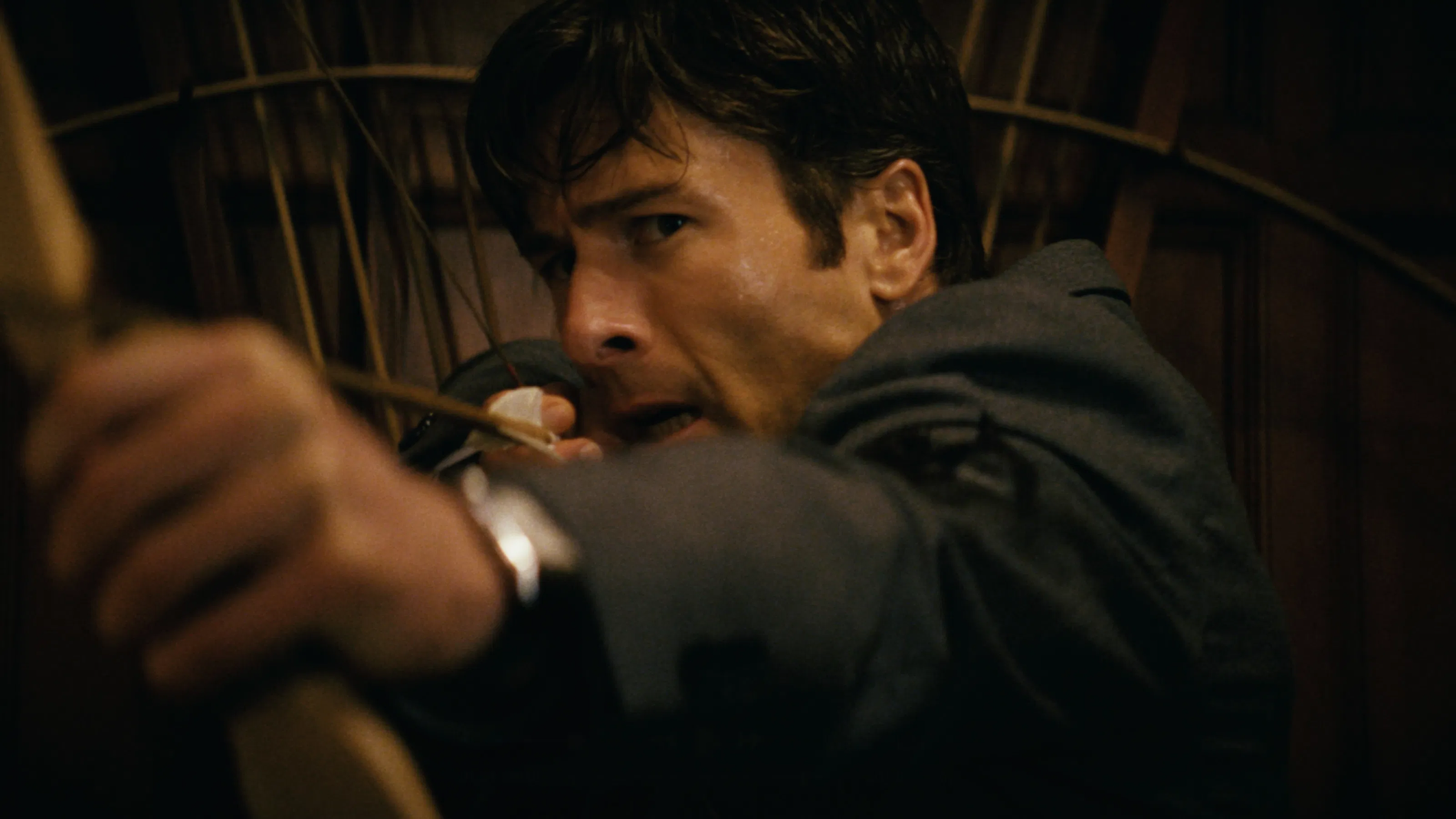
He requested vanilla but was brought chocolate, a miscarriage of last-meal justice about which he’s none too pleased. Never mind the fact that he has hours to live and only a priest to tell about how he wound up on death row — he’s oddly unconcerned about that for reasons that will become clear as writer/director John Patton Ford’s How to Make a Killing unfolds. Also brought into focus are the many ways in which leading man Glen Powell continues to be a winning screen presence, even if this fun-enough black comedy feels like a lesser version of a movie he already made: Richard Linklater’s Hit Man.
The circumstances that led to Becket’s death sentence aren’t entirely unsympathetic. He’s never met any of his ultra-wealthy relatives for the simple reason that his mother was disowned and exiled when she got pregnant with him, and on her deathbed she made her son promise to never stop fighting for “the right kind of life.” That phrasing is open to interpretation, of course, but most wouldn’t take it how he does: as a sign to murder the seven family members who are ahead of him in the line of inheritance. That mostly includes cousins but also an aunt, uncle, and the domineering patriarch (Ed Harris) who’s responsible for Becket’s mother being left in the cold.
The film has a major problem: just because it’s hard to feel bad for multibillionaires doesn’t necessarily make it easy to root for Becket as he picks off his estranged family members one by one. After dispatching two cousins and taking their job and girlfriend, respectively, he’s sitting pretty in a way his former self would have envied. Why not stop there? The further down this path he goes, the more Becket becomes what he used to hate: a Patrick Bateman-style sociopath whose lust for more is no different from that of his amoral family members. You can even imagine him quoting from American Psycho as he speaks to the priest: “...even after admitting this there is no catharsis, my punishment continues to elude me and I gain no deeper knowledge of myself; no new knowledge can be extracted from my telling. This confession has meant nothing.”
Money buys happiness, Becket assures us, and being rich is even greater than you can imagine. He also insists that his story is a tragedy, but not in the way we’re thinking. How to Make a Killing is a loose remake of 1949’s Kind Hearts and Coronets, itself an adaptation of Roy Horniman’s Israel Rank: The Autobiography of a Criminal. Ford previously directed Emily the Criminal, a smaller, more involving tale of a normal person stepping away from the person they thought they were in the process of becoming the person they truly are. His latest never self-actualizes to the same extent, though it is darkly entertaining thanks to the magnetism of its stars.
Just because it’s hard to feel bad for multibillionaires doesn’t necessarily make it easy to root for Becket.
Though the story being told is Becket’s, the movie belongs to Margaret Qualley in all the ways that count. She’s been on the rise for so long, with roles in everything from Once Upon a Time in Hollywood and Poor Things to The Substance and Blue Moon, that it was easy to overlook whatever moment it was that marked her true arrival. Here, as the femme fatale whom Becket has known since childhood and never gotten over wanting to impress despite (or perhaps because of) how awful she is, she’s at her devious best. You can see why Becket is smitten by her, even if it’s clear that she’s not to be trusted. Like a lot of will-they-won’t-they couples, you could damn them with faint praise by saying they deserve each other.
Becket does have a voice of reason in his life: his girlfriend Ruth (Jessica Henwick), who was dating his trust-fund cousin before his untimely death and who’s so unconcerned with money that she gives up a promising fashion career to become a teacher. “It’s just scary to dream small,” she says in perhaps the film’s wisest moment. “Nobody teaches us how to do that.” Becket’s own philosophy, which leads directly to his downfall, is encapsulated by his response when asked when it will all be enough: Enough what?