Issue
76
28 Years Later: The Bone Temple
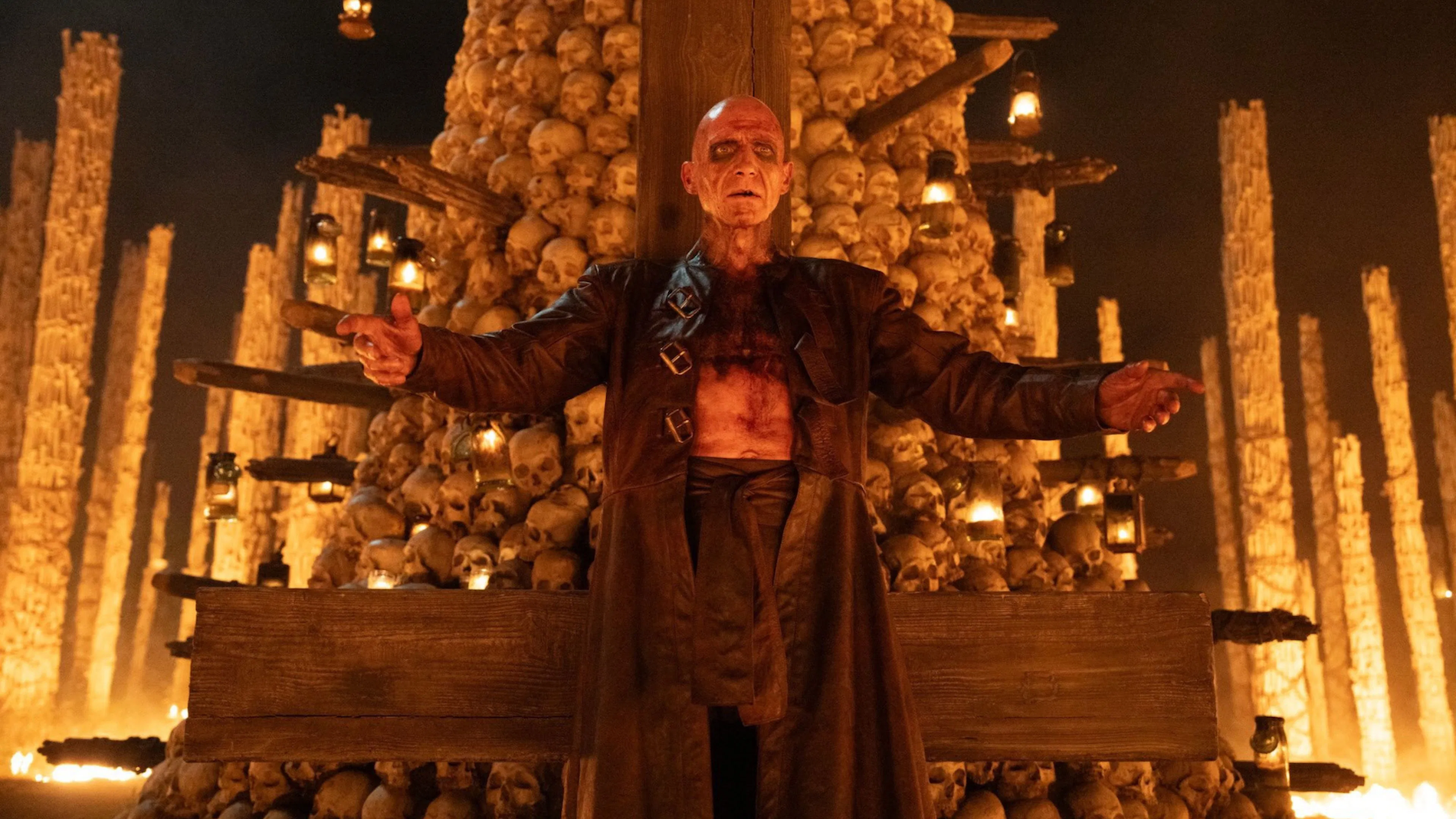
- Director:Nia DaCosta|
- Screenwriter:Alex Garland|
- Distributor:Sony Pictures Releasing|
- Year:2026
The best zombie movies are more concerned with the living than they are with the dead.
Horror’s most poignant metaphor, zombies are a cinematic Rorschach blot onto which any meaning — mindless consumerism, the inevitability of death — can be projected. In 28 Years Later: The Bone Temple, they’re barely there at all. That’s partly because, as both the fourth movie in the franchise and the second entry in a planned trilogy, it’s a middle child endeavoring to distinguish itself from its siblings. It succeeds not only in that task but also a much more important one: improving on both 2007’s largely forgotten 28 Weeks Later and last year’s 28 Years Later while also whetting our appetite for the concluding chapter.
The Bone Temple was written by returning scribe Alex Garland, who penned the original 28 Days Later and 28 Years Later, and directed by Nia DaCosta. She has a knack for latter-day sequels, having also helmed 2021’s excellent Candyman, and intuitively grasps what makes this series so unsettling: the desolation. From the first moments of Danny Boyle’s groundbreaking 2002 film, this post-apocalyptic world felt emptier than most — and the lion’s share of survivors weren’t the sort you’d want to team up with against the infected.
That’s especially true this time around, with the fanatical, flamboyant Sir Lord Jimmy Crystal (Jack O’Connell) leading a satanic cult of wayward youths who can only be initiated by killing and replacing a current member. Each of them is also named Jimmy, but collectively he refers to them as his Fingers. Outfitted in a track suit, ostentatious jewelry, and long blonde locks — all of which his acolytes also wear, albeit with wigs — Jimmy claims to speak to, and take unholy orders from, Old Nick. This chthonic theology is one of many elements that make The Bone Temple defiantly weird, especially for a $63 million production from a major Hollywood studio. Sometimes the oddity is off-putting, but more often it’s intriguing — and even strangely moving.
The living haven’t exactly won their decades-long war of attrition by the time The Bone Temple begins, but they have survived it. Humanity persists, not that words like “society” or “civilization” have been said aloud in years — like grocery stores and the internet, they ceased to exist along with billions of people. Zombies are few and far between, with one notable exception: Samson (Chi Lewis-Parry), who received his name from Dr. Ian Kelson (Ralph Fiennes) and was introduced in the prior film as an Alpha. A hulking, enormously powerful zombie with a penchant for removing his victims’ heads from their bodies in one violent motion, Samson seems to enjoy the effects of the tranquilizer darts the utterly unafraid doctor occasionally shoots him with a blowgun.
Kelson doesn’t want to kill the infected — he wants to understand them. Has the Rage Virus taken over Samson’s mind, or merely clouded it? What do they see when they look at humans: prey to be hunted, or something to be feared and therefore killed in self-defense? In even bothering to ponder such questions, The Bone Temple expands the franchise’s mythos and shows it has more on its mind than most of its genre ilk.
Sometimes the oddity is off-putting, but more often it’s intriguing — and even strangely moving.
With fewer and fewer (living) patients to treat, Kelson spends much of his time on a different project: the eponymous ossuary, which looks like it’s meant to ward off potential threats but is actually a memorial to the dead. It’s the closest the movie ever comes to tenderness, with bleached bones and skulls serving as a memento mori to both the doctor and anyone in close enough proximity to try counting the carefully arranged skeletal remains. For all his focus on death, however, Kelson hasn’t entirely lost hope for the future — especially when he begins to suspect that Samson, gazing at the moon in his morphine-induced hazes, might be recalling what once made him human.
Not much survives the end of the world, but memories do. Despite television not existing for nearly three decades and the only record player being powered by a hand-cranked generator in an underground bunker, Jimmy still fondly recalls the Teletubbies and Kelson enjoys singing and dancing to Duran Duran. This is no ordinary world, especially when the doctor manages to sedate Samson enough to dance alongside him, but it is an endlessly compelling one.
It’s also ceaselessly violent, even if surprisingly little of that violence is caused by the undead. Jimmy and his Fingers’ acts of “charity” supposedly carried out in the name of a higher (or lower, as it were) power leave a trail of flayed bodies in their wake, and Kelson doesn’t seem poised to run out of bones to add to his collection anytime soon. As tempting as it can be to blame this state of affairs on the devil, the good doctor knows the truth is much scarier: “There’s just us.”