Issue
69
Little Trouble Girls
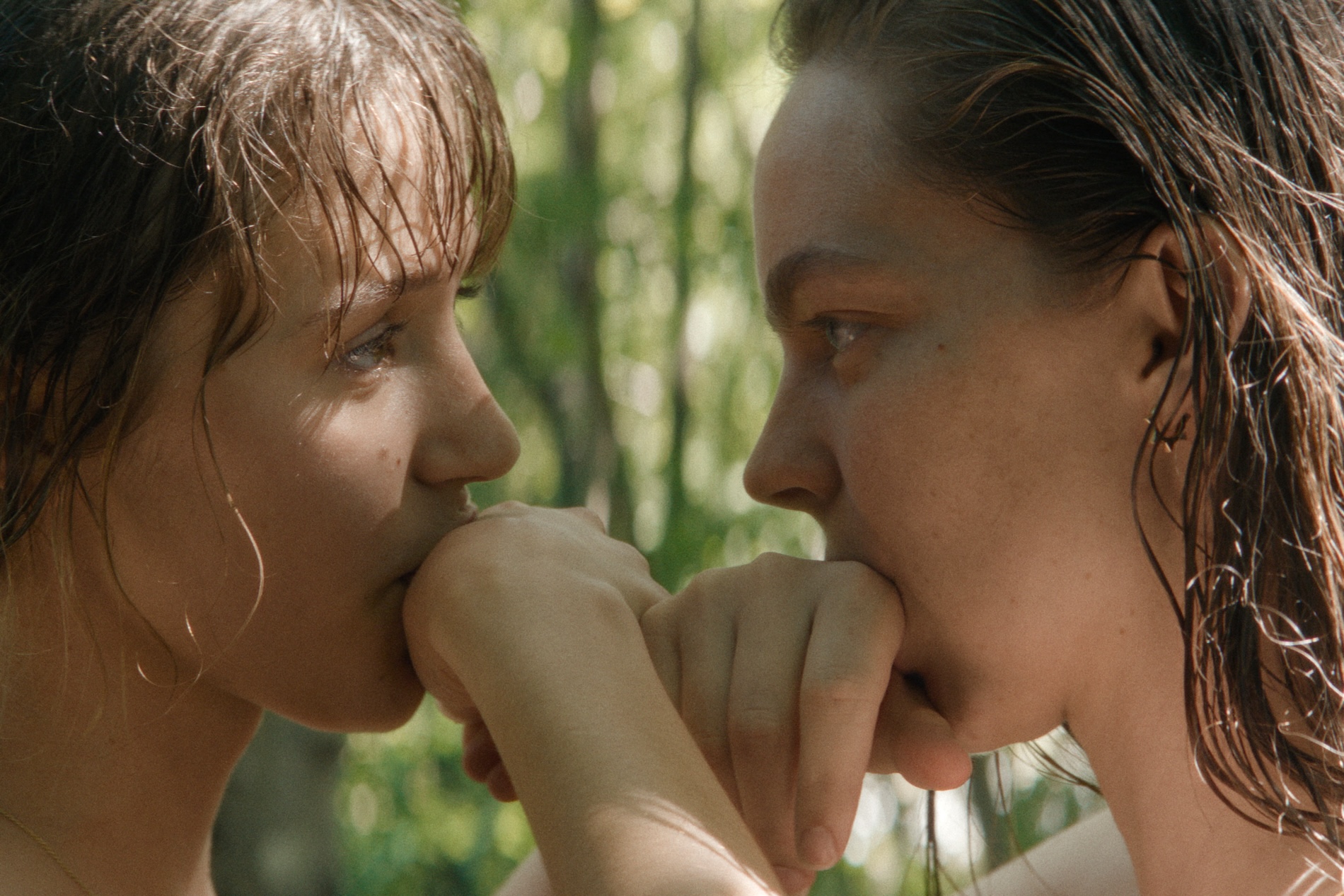
- Director:Urška Djukić|
- Screenwriter:Urška Djukić, Maria Bohr|
- Distributor:Kino Lorber|
- Year:2025
The spiritual and the sexual are inextricably linked from the first scene of Little Trouble Girls.
Lucia (Jara Sofija Ostan) has just joined her Catholic school’s all-girls choir, but her attention is divided between staying in tune and gazing at a piece of art whose shape is distinctly feminine. Those two awakenings — one pious, the other pleasurable — are often one and the same in movies, especially those about young women in close quarters, but there’s nothing lascivious about Urška Djukić’s thoughtful coming-of-age story. “A choir is a joint formation,” Lucia’s new conductor tells them during her first rehearsal. “If one of you doesn’t conform, it’ll fall apart.”
As if there weren’t already enough pressure for teenage girls to fit in. Shy and introverted, Lucia has joined the choir at her mother’s behest and quickly made friends with the girl she’s placed next to: Ana-Maria (Mina Švajger), with whom she’ll be spending even more time during the group’s three-day retreat to a rural convent. During the bus ride, Djukić briefly cuts to several roadside statues of the Virgin Mary — they would appear to be quite common in Slovenia, which has chosen Little Trouble Girls as its Oscar submission. The spiritual energy is distinctly feminine here, with crosses and other depictions of Jesus conspicuous in their absence.
Lucia is a late bloomer, not that she doesn’t know about the birds and the bees — she just isn’t sure which half of the metaphor interests her more. Her new friends ask when she first had her period (she still hasn’t), are amused when she spaces out while looking at an olive tree and other objects whose beauty she finds arresting, and don’t seem to notice her peeking as they change into the gowns that they say make them look like sacrificial virgins. She’s fairly straitlaced for her age, though not as much as her conservative mother would like her to be — in one of two conversations we see them have, Lucia is chastised for wearing lipstick.
Little Trouble Girls takes its name from the Sonic Youth song of (almost) the same name, which is singular rather than plural. It plays over the credits, its lyrics spelling out what Djukić and Maria Bohr’s screenplay was more coy about: “If you want me to / I will be the one / That is always good / And you’ll love me too / But you’ll never know / What I feel inside / That I’m really bad.” Lucia isn’t bad, of course, but that doesn’t mean she doesn’t feel that way when giving in to desire. Ostan’s performance is as elegant as Djukić’s direction, with both newcomers working in harmony to create a debut feature that’s far more assured than its heroine.
Ostan’s performance is as elegant as Djukić’s direction.
All this comes to a head during a late-night game of truth or dare during the retreat. Lucia keeps opting for the latter, presumably to avoid answering the inevitable questions about her sexual experience (or lack thereof), and is eventually told to “passionately, really passionately, kiss the most beautiful girl in the convent.” Her new friends giggle as they pass this sentence, though their amusement doesn’t seem mean-spirited. But Lucia doesn’t kiss Ana-Maria or anyone else in the room. She instead turns on her flashlight, quietly leads her new friends through dark corridors, and places a step stool in front of a Virgin Mary statue before softly kissing it as the other girls silently look on.
In a different movie, such a scene would be played for scandal and shock value. In this one, it’s an insight into our heroine’s wide-eyed view of the world as she endeavors to find her place in it. Lucia wants to keep the faith, but she also wants the same thing every girl her age does: to fit in and be liked, whether as a friend or otherwise. What emerges from that struggle is a graceful meditation on faith, desire, and the internal strife that can arise when the two intermingle in the heart of someone who doesn’t know where one ends and the other begins.