Issue
82
The Bride!
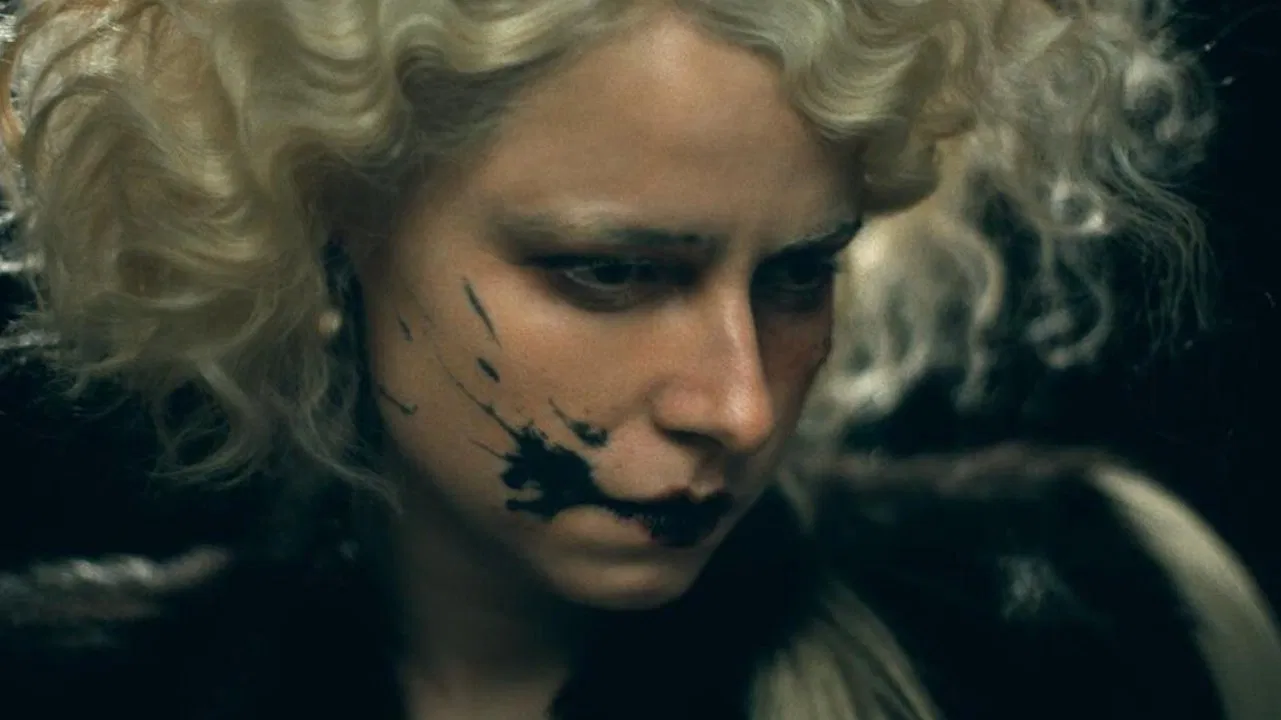
- Director:Maggie Gyllenhaal|
- Screenwriter:Maggie Gyllenhaal|
- Distributor:Warner Bros. Pictures|
- Year:2026
In the original Bride of Frankenstein, the Bride herself doesn’t appear until the last five minutes.
Created for the sole purpose of being the “monster’s mate,” she doesn’t have any dialogue other than a few growls and is never even given a name. That scant characterization hasn’t prevented James Whale’s 1935 masterpiece from being one of the greatest horror movies of all time, but it has made the title character something of an enigma even while being recognized as an icon. She first appeared in the 1818 Mary Shelley novel that started it all, with Frankenstein’s monster entreating his creator to end his solitude by making him a companion: “Shall each man find a wife for his bosom,” he asks, “and each beast have his mate, and I be alone?” The not-so-good doctor destroys the Bride before finishing her, fearing what may happen if the two monsters should breed, and seals his own fate in the process.
With all that in mind, one might reasonably assume that The Bride! represents actor-turned-filmmaker Maggie Gyllenhaal’s attempt to not only flesh out a character who played a minor role in her own movie but also to give her a voice, agency, and, yes, a name. (Two, actually: Ida before she dies and Penelope after she’s brought back to life.) The result is a big, blinking neon sign of a movie, one that announces itself loudly and boldly and never stops reminding you that it’s as strange as it is ambitious.
Which isn’t to say it’s always successful. The Bride! is all over the place, veering wildly from subdued brilliance in one scene to over-the-top exuberance in the next; you’ll be in awe of Gyllenhaal’s audacity as often as you’re raising your eyebrows at her creative choices. Sometimes less is more, and though Gyllenhaal’s maximalist approach certainly reinvigorates the Bride in a way we’ve never seen before, her version of the story could have used less electricity and more calculation.
The movie begins in 1930s Chicago, at which point “Frank” (Christian Bale) has been around for more than a century and is seeking a meeting with one Dr. Euphronious (Annette Bening). “Is this about sex?” she asks when he tells her why he’s sought her out; no, he tells her, it’s about loneliness. Though hesitant, she eventually agrees to do what he asks of her — partly out of pity, partly out of curiosity. Frank’s initial response to seeing the corpse of his bride-to-be (Jessie Buckley) is that she’s too beautiful — even reanimated with scars of her own and none of her memories, how could a woman like her love a monster like him?
You might wonder the same, especially as neither Frank nor Euphronious choose to tell the Bride how she came to be. What follows from here feels like the movie Joker: Folie à Deux wanted to be, a Bonnie and Clyde–inflected tale of amour fou and science run amok. Buckley is never not great, including in Gyllenhaal’s The Lost Daughter, and here, a week away from a near-certain Best Actress win for her devastating turn in Hamnet, she’s brought the Bride to life in a wholly new way. Like Elsa Lanchester before her, she plays both the Bride and, in a series of black-and-white sequences that show the author haunting and/or possessing our heroine, Shelley as well. Frankenstein’s author addresses us directly at times, laying out what’s on her — and Gyllenhaal’s — mind from beyond the veil in an out-there manner befitting the movie’s wall-to-wall eccentricity.
Her version of the story could have used less electricity and more calculation.
This isn’t the kind of performance the Academy rewards, but in its own way it’s just as remarkable as the one Buckley is about to win an Oscar for. The Bride free associates verbally and physically, as unfiltered in words as she is in deeds — it’s as though the electrical current that brought her back from the grave never stopped surging through her and she’s unable to do anything but channel a century’s worth of female rage in her every action. “The dead have got something to say,” she proclaims while pointing a gun at a room full of unsuspecting merrymakers, “and I’m saying it.”
Fittingly for a remake of a movie made during the Golden Age of Hollywood, The Bride! uses that era of movies as a narrative through-line. Frank is enamored with the films of Ronnie Reed (Jake Gyllenhaal), a fictional triple threat in the Fred Astaire mold who sings, dances, and acts his way to enduring stardom — and whose place Frank imagines himself taking onscreen when he watches his pictures. It’s the creature as cinephile, and you’d be forgiven for thinking Frank a gentle giant until the first time he caves in a man’s skull.
“There’s nothing left to do now but live,” Frank tells the Bride as their accidental crime spree inevitably spirals out of control. That go-for-broke approach is reflected in the film itself, which is the kind of big swing that filmmakers backed by major studios should be allowed to take more often — especially when the studio in question is about to be subsumed by another in one of the most troubling acquisitions in recent memory. Whatever its faults, let it not be said that The Bride! lacks for the kind of mad-scientist energy that Hollywood could use more of.