Issue
86
Living the Land
- Director:Huo Meng|
- Screenwriter:Huo Meng|
- Distributor:Film Movement|
- Year:2025
Progress comes at a price.
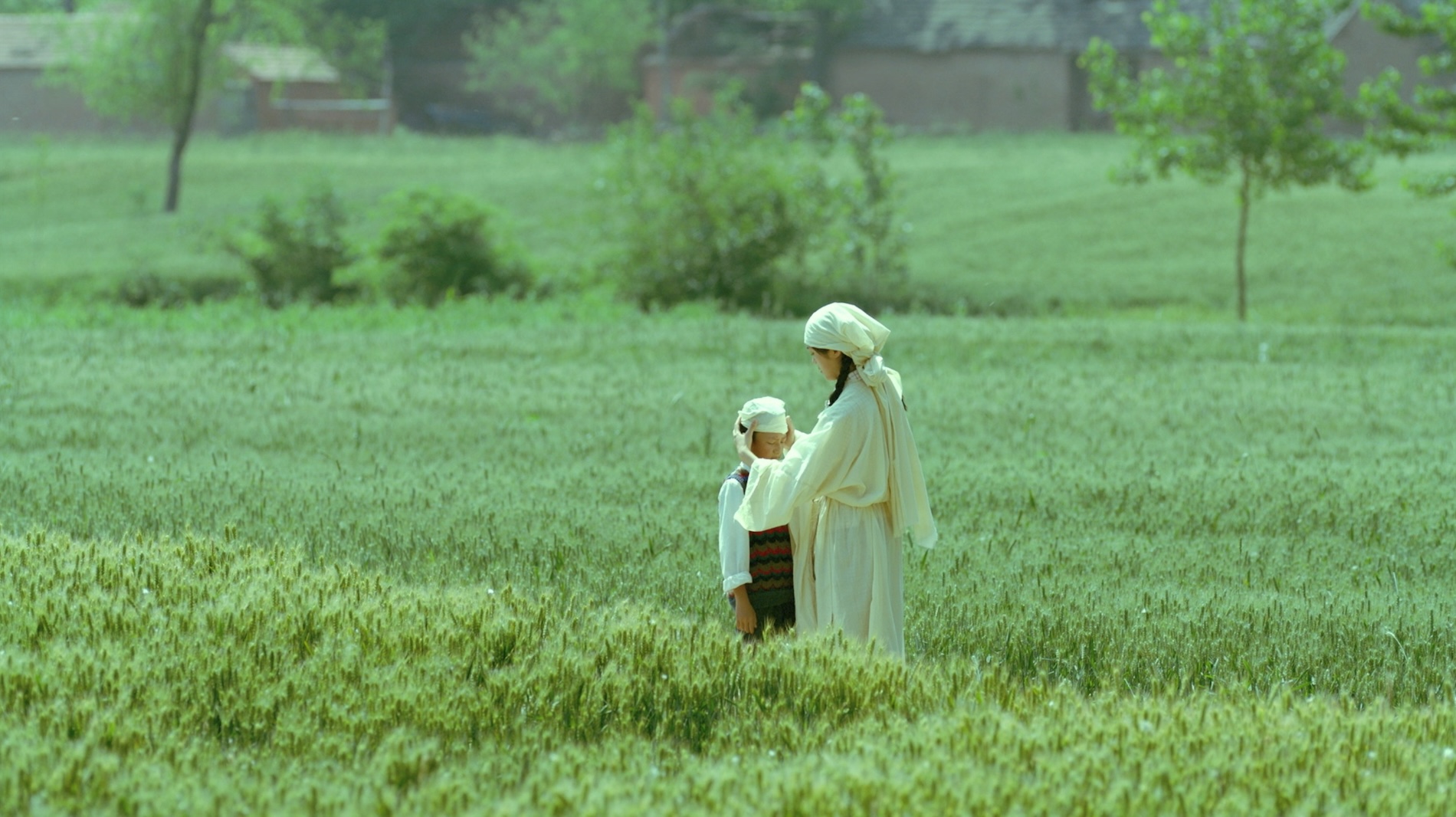
In writer/director Huo Meng’s Living the Land, the toll can be measured in both money spent and lives lost. Set in rural China and beginning in 1991, the film immediately lives up to its title with vivid imagery: lush, rolling hills contrast the pinks and oranges of sunsets that fill the entire frame and trick you, however momentarily, into thinking there must be no troubles in a place like this. There’s little else but trouble in Huo’s carefully observed drama, alas, which follows a 10-year-old left to stay with his wheat-farming uncle as his immediate family seeks work in the city.
The early ‘90s were a time of great change and rapid growth in the Middle Kingdom, which was good news for the country’s position on the world stage but a fraught prospect for the salt-of-the-earth types for whom industrialization posed an existential threat. Huo is sensitive to his characters’ plight without portraying them as hapless victims. While it’s true that Xu Chuang (Wang Shang) and his family seem outmatched by the external forces imperiling their way of life, neither are they passive observers. Every field tilled and crop harvested is an act not just of survival but defiance, a line that becomes increasingly blurred as the story progresses.
Huo won the Berlin Film Festival’s Silver Bear for Best Director for his work on the film, which is just his second feature after 2018’s Crossing the Border — Zhaoguan. He gives the impression of a seasoned hand used to working behind the camera, much as his characters and their forebears have been working the fields for untold generations. This region of Henan, a populous province in Central China, is not an inherently harsh one, but just because the soil is fertile doesn’t make what grows from it easy to reap. Though they’d be forgiven for resenting this land, Chuang and his elders more often revere it.
When we first meet them, it’s as they recover Chuang’s grandfather’s bones from a hole in a field and the bullets with which he was killed. Countless others were similarly disposed of during the Maoist revolution in the ‘60s and ‘70s, echoes of which reverberate throughout the film; not everyone was invited to take part in the Great Leap Forward. Chuang feels like an outsider among his extended family, who provide for him without ever truly welcoming him into the fold. In eking out their meager existence, Huo’s characters lay bare a similar tension: being part of a larger cultural tapestry without fully belonging to it.
Every field tilled and crop harvested is an act not just of survival but defiance.
Huo’s manner of observation is sometimes dispassionate, like a documentarian training his camera on the everyday and letting it slowly reveal the extraordinary. He and cinematographer Guo Daming shot the film over the course of a year, allowing the gentle rhythms of all four seasons to subtly punctuate the narrative. Winter is harsh and spring is hopeful, but Huo is never hamfisted in transitioning from one to the next.
Chuang is the third-born child in his family, a lowly station that makes him the clear choice to stay behind when his parents see no other choice but to seek opportunities elsewhere. Still, there are moments of connection. “The books say that our body doesn’t know anything,” his grandmother tells him at one point, adding that it’s “just a bunch of cells” that get replaced every year. When we die, they scatter among the ground, river, and wind — so everywhere, essentially. In that way, the land itself is living and will continue to be long after the rest of us are not.