Issue
94
Renoir
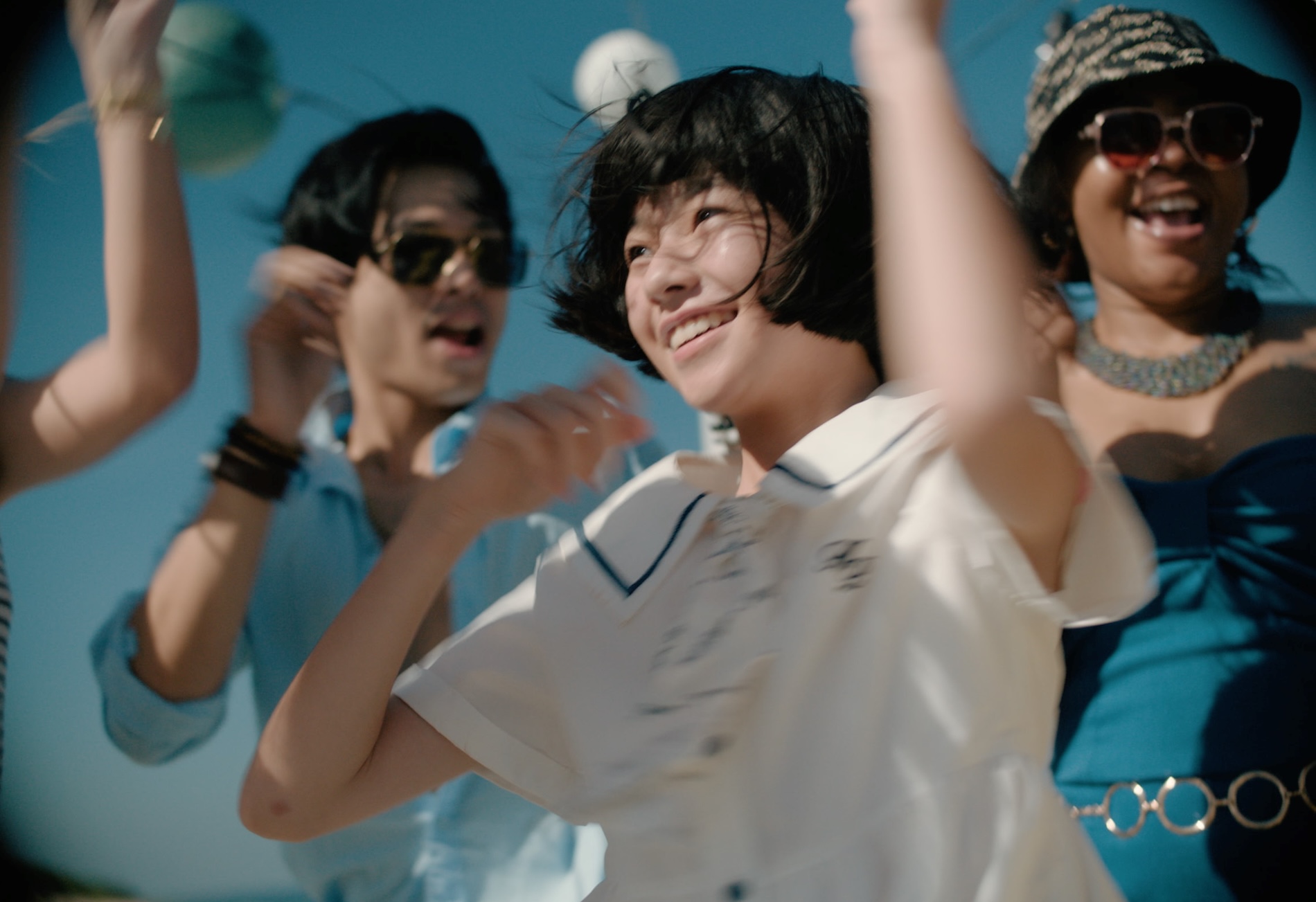
- Director:Chie Hayakawa|
- Screenwriter:Chie Hayakawa|
- Distributor:Film Movement|
- Year:2025
A curious movie about a curious little girl, Renoir introduces its 11-year-old heroine as she watches home videos of crying babies.
As with most else about Fuki (incredible newcomer Yui Suzuki), this pastime suggests a blending of the whimsical and the morbid in writer/director Chie Hayakawa’s ‘80s-set period piece — especially once we learn more about the tape’s origins. After daydreaming her own murder just moments later, Fuki wonders aloud whether we cry for the dead or for ourselves when such a thing happens; she also titles one of her essays “I’d Like to Be an Orphan.” Even as he praises her for having a unique imagination, the schoolteacher who graded that paper asks Fuki’s mother whether something is going on at home.
The answer is a resounding yes, but the sad circumstances of our protagonist’s home life only partially explain why she is the way she is. Fuki is curious in both senses of the word: fascinated by the world around her and a bit strange herself. She’s one of those children with little chance of being understood by either her peers or her parents, one of whom is terminally ill. That her father is dying of cancer helps explain why so many of her flights of fancy involve death, but you get the sense that Fuki was a bit out-there even before dad’s diagnosis. There’s something unknowable about the girl, which, in the case of this richly textured character study, only makes us want to know her more.
Hayakawa’s sophomore feature offers an absorbing, impressionistic view of childhood that, like its heroine, is hyper-specific in a way that makes universality feel overrated in coming-of-age stories. Maybe that’s because Fuki doesn’t really come of age over the nearly two hours we spend with her. Suzuki, a powerhouse performer whose talent belies both her age and inexperience, makes her character into a person-in-progress whose growth is as subtle as it is riveting to behold. Her environs are vividly rendered by Hayakawa and cinematographer Hideho Urata, whose lensing makes ‘80s Tokyo feel vibrantly alive yet distinctly out of the past.
Renoir is as much a portrait as it is a narrative, which is fitting given the title. Hayakawa named her diffuse drama after the French painter for reasons that are only partially clear even after watching. The artist is only mentioned in passing near the end of the film, but his paintings can be found throughout the hospital where much of the action takes place. (Hayakawa has said she was “enchanted” by Renoir’s Little Irène as a child and, like Fuki, pestered her father to buy a reproduction of it; the impressionist is highly popular in Japan, where his work embodied admiration for the West during the period Renoir takes place.)
Renoir premiered at the Cannes Film Festival, as did Hayakawa’s previous film, the startlingly different Plan 75, a speculative look at the problems posed by Japan’s rapidly aging population and one extreme solution to it. Where one movie focuses on the elderly, the other concerns itself with youth. Neither feel far from death, but only Renoir finds anything uplifting in it.
Fuki is curious in both senses of the word: fascinated by the world around her and a bit strange herself.
When she isn’t daydreaming, Fuki is doing a strikingly accurate impression of a whinnying horse, calling into a telephone dating service (sometimes at the same time), or dabbling in the occult as a medium. Hayakawa herself may not expect us to fully understand Fuki, but she does want us to try — and, should we come up short, at least understand the circumstances that have shaped her into the person she’s becoming. Renoir is set long before people who felt out of place at home in their own families or communities could seek out like-minded oddballs online, and the only person who at least thinks she understands Fuki is her English tutor.
She’s wrong, but the effort she puts forth matters. When, late in the film, Fuki gives a heartbreaking answer to how she spent her summer vacation — “I went to my father’s funeral” — the young teacher says that she experienced a similar loss as a child and embraces her bereaved pupil. It’s a rare moment of connection, even as Fuki’s nonplussed reaction makes it clear that the only true way to understand her is to be her.