Issue
99
The Odyssey
- Director:Christopher Nolan|
- Screenwriter:Christopher Nolan|
- Distributor:Universal Pictures|
- Year:2026
Tell me, oh Muse, of the new Christopher Nolan movie.
Let’s start with the fact that, simply by virtue of being a Christopher Nolan movie, The Odyssey is an event unto itself. That’s a vanishingly rare feat at a time when ticket sales are driven largely by familiarity (Toy Story 5) and/or lightning-in-a-bottle novelty (Obsession), but Nolan consistently captures audiences’ attention in a way that no other filmmaker working today does — just ask Steven Spielberg, whose Disclosure Day disappointed at the box office despite being the best film of the year so far.
Then there’s the subject matter: Homer’s timeless poem, which many read an abridged version of in high school but few remember in enough detail for the prospect of a film adaptation to seem like old hat. Several of Nolan’s movies are epic, but this is his first literal epic. It’s also his first project since winning Best Picture and Director for Oppenheimer, which is all the more reason The Odyssey is the most anticipated movie of the year. It’ll surely be remembered as one of the best: a movie that jumps off the screen and makes the old feel new again, applying ancient wisdom to modern techniques. It’s a staggering accomplishment sure to stand the test of time — not for thousands of years, perhaps, but certainly for as long as people still think and care about movies.
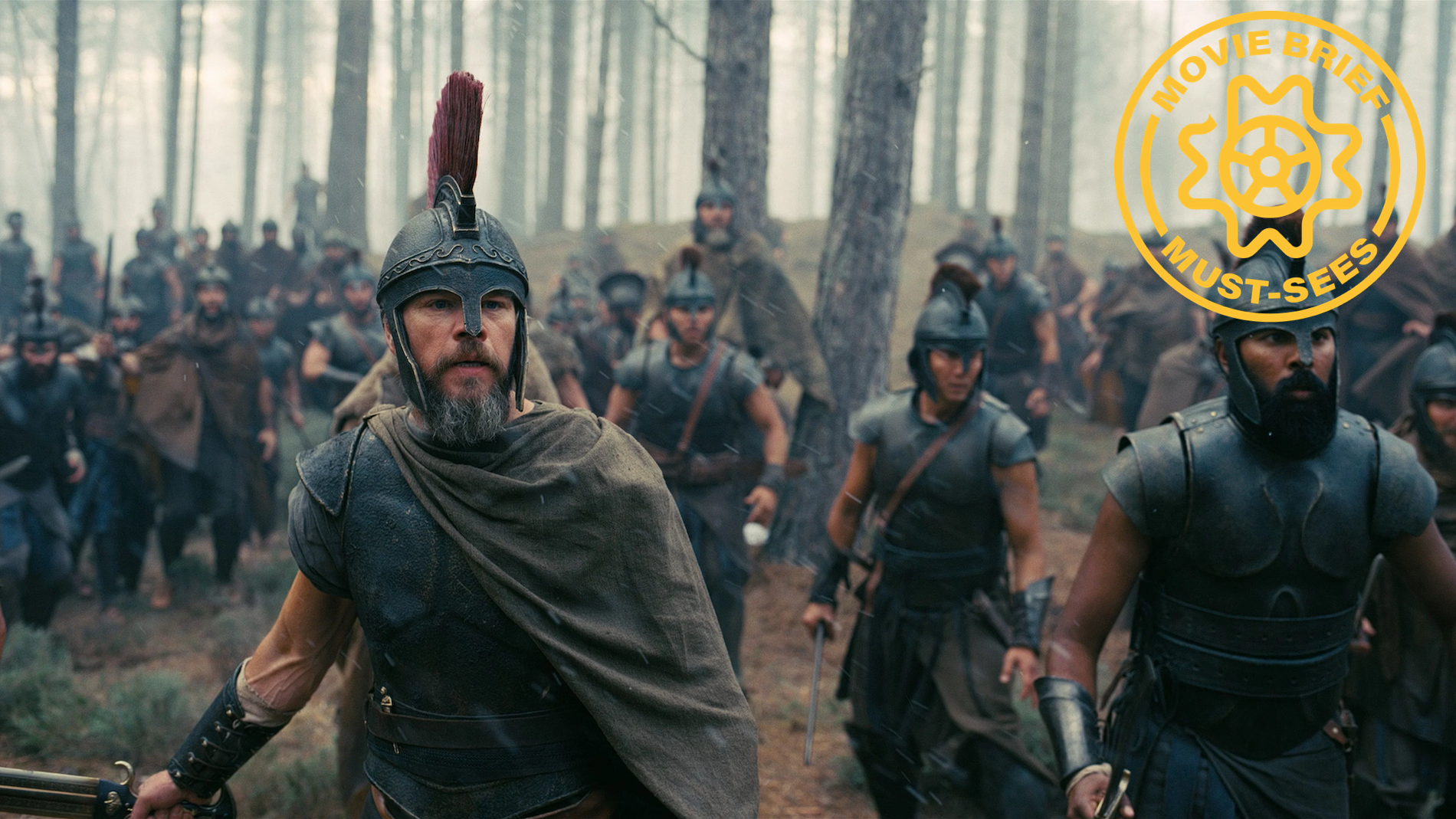
Odysseus (Matt Damon) is already a legend by the time the film begins, with songs about how he won the Trojan War sung far and wide — including the home he hasn’t seen in 20 years. His son Telemachus (Tom Holland) has heard the bards sing his father’s praises, but was so young when Odysseus set sail for Troy that the two might as well have never met. Penelope (Anne Hathaway), too, has suffered these long years that Ithaca has been without a king, she has been without a husband, and dozens of suitors have descended upon their home to supplant Odysseus. “A man does what he wants,” she tells Telemachus, who desperately wants the suitors gone, “I do what I can.”
The reason these would-be usurpers have had the run of the place for so long is Zeus’ Law, which mandates that hosts provide any and all guests with food, drink, and shelter before asking their name. It’s largely based on fear — xenia, as it’s also known, is predicated on the idea that any stranger could be a god in disguise — and proves to be the film’s most consistent through-line. Many break this rule and suffer a range of consequences for it, including Odysseus himself. In the film’s most poignant scene, he recasts his war-winning Trojan Horse scheme as a betrayal of the very ideals that make civilization function; this, in turn, recasts his odyssey as a decade-long act of penance. It’s a bold, poignant take on a text that has been endlessly reinterpreted and reimagined that speaks to both the source material’s timelessness and Nolan’s ability to put a fresh spin on it.
The story is in many ways about faith: faith that Odysseus will return home, faith that his wife and son will be waiting for him when he does, faith that the gods will favor his journey. Well, two of three ain’t bad. An early, standout sequence involving a Cyclops — the design of which would make Guillermo del Toro proud — ensures that the rest of Odysseus and his men’s excursion home will be as arduous as possible, as the one-eyed shepherd they blind happens to be the son of the sea god, Poseidon.
Though much of The Odyssey is about persistence and bravery, it’s also about encountering powerful forces beyond one’s reckoning and badly misjudging how to deal with them. Men hear the sirens’ call and willingly swim to their doom; Odysseus eats the lotus flowers given to him by Calypso and spends seven years lost in both his own mind and her remote prison of an island. Apropos of its scope, this is really several stories in one, each of which is compelling in its own right but more special for the way they’re woven into a whole.
It’s a staggering accomplishment sure to stand the test of time — not for thousands of years, perhaps, but certainly for as long as people still think and care about movies.
For while our hero is clever — it’s kind of his defining trait — he also makes more than his fair share of mistakes that bring harm to his men and delay his return. Rather than make him less heroic, these blunders make him more human. Damon, whose history of long journeys home stretches back to The Martian and Saving Private Ryan, is greyed, grizzled, and not at all optimistic that he’ll survive the journey.
The best performance, though, might be one of the briefest: Samantha Morton as Circe, a witch who transforms Odysseus’ men into pigs after inviting them into her home with the promise of food. It’s an act of body-horror queasiness, inventive visual effects, and a scene-stealing turn from a brilliant actress with a long history of doing just that. The Odyssey is at its best when it’s at its weirdest and most fantastical, traits embodied by its hero’s detours to Aeaea, Ogygia, and, most frighteningly, Hades itself.
“No man ever steps in the same river twice,” according to the ancient Greek philosopher Heraclitus, “for it is not the same river and he is not the same man.” The Odyssey suggests that going home, at least after an ordeal as long and arduous as what Odysseus endures, is not dissimilar. That doesn’t mean you shouldn’t try or that the effort won’t be worth it, though. Perhaps more than any story ever told, The Odyssey truly is about the journey rather than the destination. In Nolan’s hands, however, one is somehow as meaningful as the other.