Issue
115
Godzilla Minus Zero
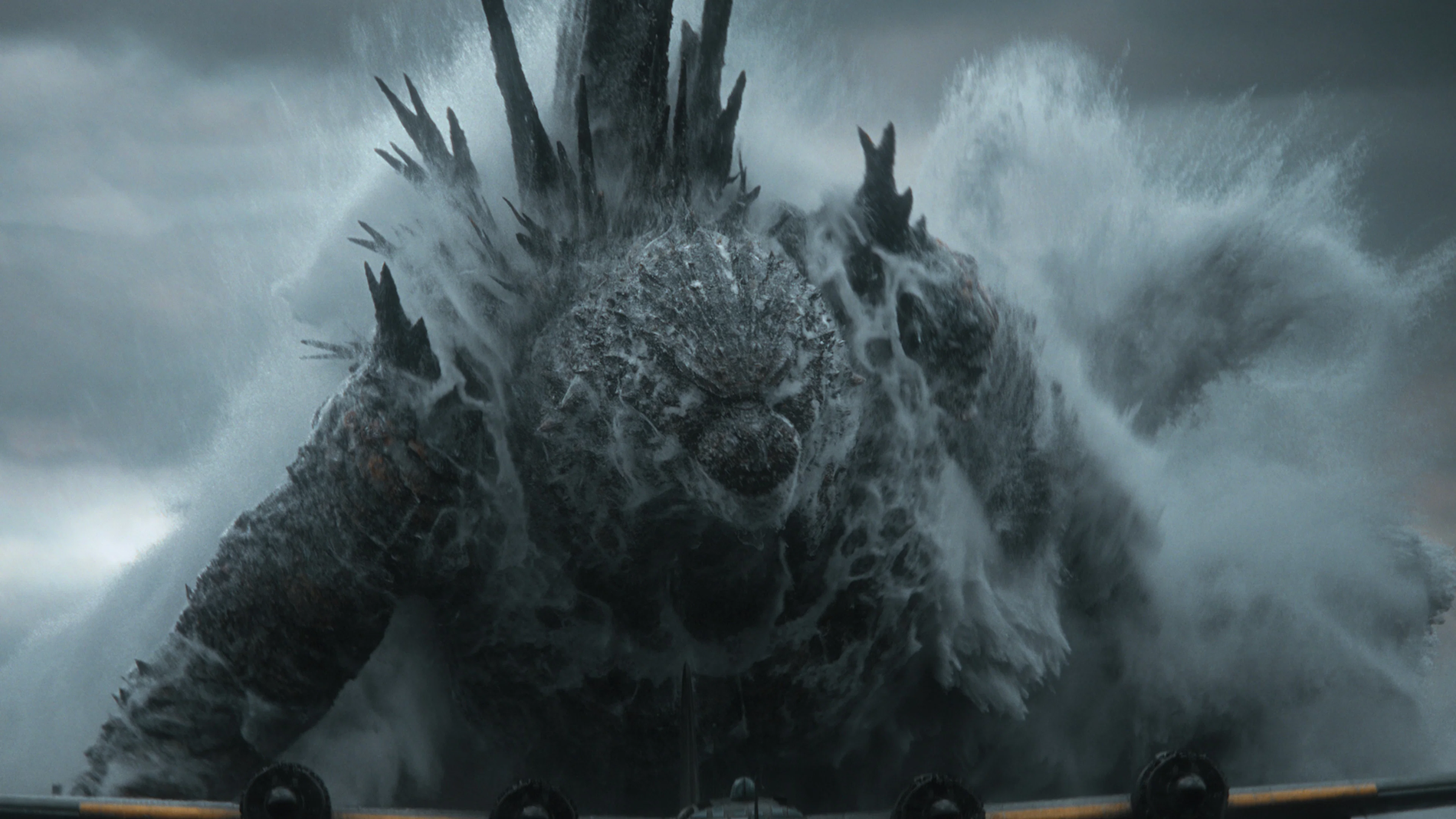
- Director:Takashi Yamazaki|
- Screenwriter:Takashi Yamazaki|
- Distributor:GKIDS|
- Year:2026
Godzilla: the cause of, and solution to, all of life’s problems.
That’s as pithy a summation of the 72-year-old kaiju franchise as I can offer after having seen about 25 installments, only a small handful of which are better than Godzilla Minus Zero. The sequel to returning writer/director Takashi Yamazaki’s superlative Godzilla Minus One, which became the first entry to win the series an Academy Award when it took home the prize for Visual Effects, is a worthy follow-up that picks up the torch and runs through the ruins with it. Once again, the hapless human characters contend with the same question many of their predecessors have asked moments before being obliterated by a blast of atomic breath: “Will we ever live in peace?”
Short answer? No. Long answer? SKREEONK! But while the King of All Monsters will never leave the good people of Japan alone, he will sometimes fight alongside them. Watch any two or three of his films and you’ll witness the same arc repeat itself: Godzilla emerges from the ocean, causes unfathomable destruction, and returns to the depths after being defeated; another kaiju appears at the beginning of the next movie, leaving Goji with no choice but to protect the very populace he once terrorized.
Whether he does so out of the goodness of his gargantuan heart or merely to assert his dominance over another monster is ultimately immaterial so long as Anguiris, Rodan, or Mechagodzilla is vanquished in the end. Godzilla has had many such foes over the decades, and Minus Zero wisely focuses on the Joker to his Batman: King Ghidorah, a three-headed dragon that wields electricity the way Godzilla breathes fire. The two have been doing battle since 1964 and, one hopes, won’t stop anytime soon.
The story takes place in 1949, two years after the events of Minus One. Kamikaze pilot Kōichi (Ryunosuke Kamiki), who outmaneuvered Godzilla last time, is now married to Noriko (Minami Hamabe), who narrowly survived the kaiju’s atomic breath; together they’re raising an orphan named Akiko (Sae Nagatani) as their adopted daughter. Both are called upon to return to the battle when a dragon-like kaiju levels Matsumoto City and the government’s attempt to destroy what they’re now calling Ghidorah only makes him stronger (oops). Once Godzilla is inevitably awakened, the country’s brightest minds settle on the only sensible strategy: let them fight.
Like its predecessor, Godzilla Minus Zero is the vanishingly rare creature feature that not only foregrounds its human characters but makes you care about them. The scientists, nurses, fighter pilots, and war orphans working to save their already devastated country from further destruction do so with honor and dignity, making it all the more upsetting when some of them inevitably give their lives to the cause. Yamazaki renders their plight even more affecting via one of the most intriguing subplots in franchise history: Godzilla cells, which cause survivors of his last attack to grow scales and other kaiju characteristics before ultimately perishing.
That’s bad news for Noriko, whose eyepatch hides an orange-colored iris and who has scales of her own sprouting from her shoulder blade. Already the longest-living survivor, she’s convinced her days are numbered. This is among the film’s most explicit reference to hibakusha, meaning “bomb survivor”: those who didn’t die in Hiroshima and/or Nagasaki but were irrevocably altered by their literal and figurative wounds. Minus Zero suggests that such trauma isn’t just physical or psychological — it changes you on a cellular level. The concept fuses the franchise’s monsters and humans in a deeper, more poignant way than ever before and reminds us that its namesake only arose from the seafloor in the first place because he was disturbed by hydrogen bomb tests.
Like its predecessor, Godzilla Minus Zero is the vanishingly rare creature feature that not only foregrounds its human characters but makes you care about them.
Godzilla himself is conspicuously absent for much of the film, not that you’ll mind — the human drama is so compelling that you might not even notice. Even so, as someone who rolls his eyes when people clap during movies, I had to physically restrain myself from standing up and applauding when the big guy finally appeared onscreen — not as a destroyer, this time, but as a protector. Between this and another sequence in which Ghidorah evolves into his final form, Minus Zero’s signature set pieces are literally jaw-dropping.
Like the best Godzilla movies, this one speaks to uniquely Japanese anxieties about the postwar period and the universal desire to watch monsters destroy cities; Godzilla, far more than most epic franchises, appeals to both the lizard brain and the superego. Toho’s most famous creation has been deeply silly as often as not, but it’s rarely been bereft of deeper ideas about national identity, postwar rebuilding, and the strength we call upon without realizing we had it.
Any ubiquitous movie franchise you can think of — Star Wars, James Bond, any and all Cinematic Universes based on comic books — is both younger than, and owes something to, Godzilla. He’s become not only a symbol of Japan but, more surprisingly, a kind of motivational speaker: “Saying ‘my life stinks’ when things go wrong is self-deprecrating, defeatist, and fills you with sadness,” according to arguably the best meme on the internet. “Saying ‘this isn’t the life Godzilla wants for me’ is motivating, makes you think about Godzilla, and reminds you that Godzilla cares about you.” That’s worth remembering not only as you go about your day but as you sit down to watch Minus Zero, which is very much the movie Godzilla wants for you.